Your Guide to Seamless Printing

Get Started with your Canon Printer Setup, Canon Printer Download on ij.start.canon

Search your Printer Model, Download Canon Printer Drivers, and follow the step-by-step installation guide. Set up your product and get the most out of it with Downloads, Online Manuals, and More.

Popular Printers

For Newly Purchased Printers

Before you Start

Here are some of the things you need to take care of before setting up your Printer

Unboxing Canon Printer

Unboxing

Unboxing your Printer is not that big of a deal, but you should follow these steps to make the setup easy:

  1. Unbox your printer from the box with the top side up; it is usually shown on the printer box which side is up.
  2. Do not shake the printer violently while taking it out of the box; make it smooth so that you do not dislocate any moving parts.
  3. Remove the protective tape from the printer; it is usually in blue or orange color, and it helps the moving parts stay in one place while the printer is in transit.
  4. Take the accessories out of the box and the ink/catridged that came with it.
  5. Do not remove the packaging of the ink or Cartidge until you are ready to install it.
  6. Make sure the cartridge and the printer are kept in a dust-free place; if the dust is lodged in the printer cartridges, it will be very hard to remove it and clean it.
Initial Setup

Initial Setup

When the printer is purchased, it needs a few minutes to initialise after the ink installation, and you should always perform a test before using the printer. Here is how you initially set the printer up:

  1. Once you have installed the ink cartridges or poured ink into the ink tanks.
  2. Plug the printer into the power supply and turn the printer on.
  3. The first boot of the printer needs about 4-5 minutes to properly set everything up. While the printer is setting itself up for the first time, it usually makes noise like the roller is moving and other parts in the printer are moving; it is completely normal.
  4. Wait for it to finish, then follow the installation and setup guide to connect the printer to your device.
Detailed

Installing Canon Printer Drivers from ij.start.canon

Two things need to be true before you start. The printer has to be switched on, and your computer needs internet access. That's it. You don't need the USB cable plugged in yet, and if you're setting up over Wi-Fi, you may not need it at all. The installer will tell you when it wants one.

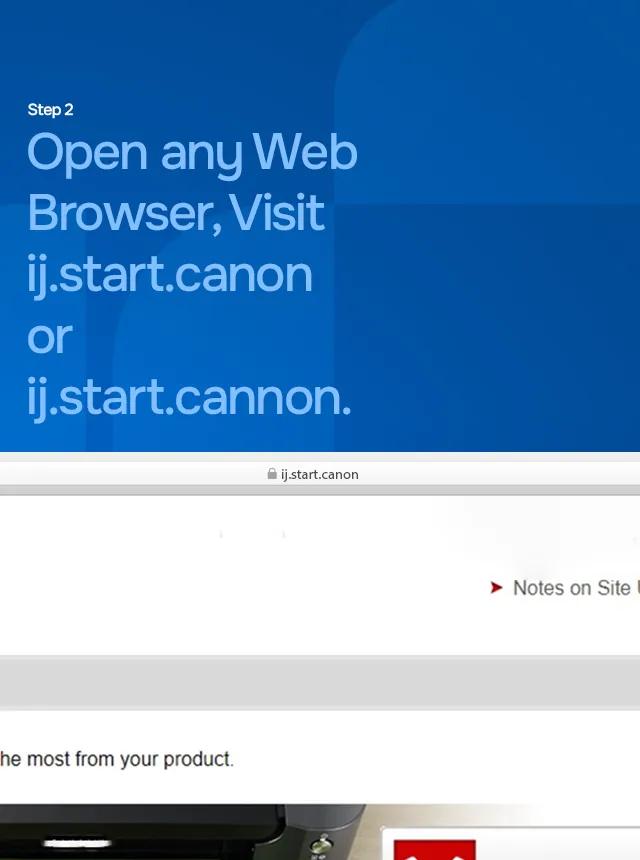
  1. Type it straight into the address bar. Not into Google.

    We're being deliberate about that. Searching for Canon drivers turns up a pile of sites with names built to look almost right. Hyphens in odd places, .com tacked on the end, that sort of thing. Some charge you for drivers Canon hands out for free. A few are worse than that. The real address is ij.start.canon and nothing else, and typing it yourself takes the same four seconds.

  2. It's on the right side of the page, red icon, hard to miss.

  3. A search box comes up. Start typing, and it'll suggest matches as you go.

    Use the full model number off the sticker on the printer, not the name on the box. Canon sells the same machine as a TS3350 in one country and a TS3320 in another, and the drivers aren't interchangeable. If yours doesn't come up at all, change the region setting in the top-left corner. That's almost always why.

  4. Canon walks you through the whole thing with pictures. Press start and follow along. It covers unpacking, ink, the paper tray, all of it, so if you've already done those bits, you can move through them quickly.

    Keep going until you reach the driver download.

  5. One button. Depending on your browser, it'll either save straight to Downloads or ask you where to put it first.

  6. Open the file you just downloaded. On Windows, it'll ask for permission to make changes, which is normal. Accept the licence terms and leave the install location at whatever it suggests unless you've got a reason not to.

  7. This is the part where the order matters. The installer tells you when to plug in the USB cable or start the wireless connection, and plugging in early confuses things on Windows. It creates a second half-configured printer entry, and then you've got two, one of which doesn't work.

    For Wi-Fi, you'll usually either pick your network on the printer's own screen or press a button on the printer when prompted. Which one depends on the model.

  8. The installer offers this at the end. Take it. Better to find out now than the first time you actually need something printed.

    It'll also ask about registering the printer. That's optional, and it's mostly for warranty and marketing. Skip it if you'd rather.

Go to ij.start.canon

Supported Devices

Canon setup guides cover major operating systems and mobile platforms.

Windows

Windows

Intel, AMD, ARM, 64 Bit, 32 Bit

Mac

Mac

MacBook Pro, Mac Computers

iOS

iOS

iPhone, iPad

Android

Android

Tablets, Smartphones

Chrome OS

Chrome OS

Chrome Books

Linux

Linux

Ubuntu, Mint, Major Distros

Copy, Scan, Align your Canon Printers and Scanners

Copy or Duplicate with Canon Printers & Scanners

Copying on a Canon all-in-one takes about thirty seconds once you know where the buttons are. Here's the whole process.

  1. Turn the printer on and wait for it to warm up. Most models run a short startup routine and won't respond to the control panel until that's done.
  2. Lift the scanner lid and lay the page face-down on the glass. Small arrows or notches are moulded into the corner of the glass. Line the edge of your page up with those, or the copy comes out crooked with a black band down one side.
  3. Find the copy function. Look for a Copy button, or one marked Copy/Scan. On simpler models, it's a single physical button. On ones with a touchscreen, you'll tap through to it from the home screen instead.
  4. Set your options: how many copies, what paper size, colour or black and white, and how good you want the output to look. Draft quality is fine for something you're going to scribble on. Turn it up for anything you're handing to someone else. The exact menu layout differs between models, so check your manual if you can't find a setting.
  5. Press Start. The printer scans the page, then prints it. Don't lift the lid while it's scanning. Doing that mid-pass streaks light across the copy.
  6. Collect the copies from the output tray. Give the first one a look before you run the rest of the stack. Faint text or a line running down the page usually means low ink or a dirty scanner glass, and it's better to catch that on copy one than copy forty.

A note on models: these steps cover the general process across Canon's range. Button names, menu structures, and available settings vary quite a bit between an entry-level PIXMA and an office multifunction. For anything specific to your machine, check the manual or look your model up on Canon's setup site at ij.start.canon.

Align your Canon Printer

Print head alignment is one of those maintenance jobs nobody does until something looks wrong. Usually it's text that's gone slightly soft around the edges, or a table border that prints with a faint ghost line running alongside it. Vertical lines are the giveaway. If they look doubled, the head has drifted.

A new cartridge will do it. So will moving the printer, or a knock, or nothing identifiable at all. Either way, the fix is the same, and it takes about five minutes, most of which is waiting.

Getting to the tool

The printer needs to be on and connected, USB or Wi-Fi; it doesn't matter which.

If you've never installed Canon's software on this computer, get the driver package for your model from Canon's support site first. The disc in the box is a trap. It's older than whatever's online, and on Windows 11 it frequently refuses to install at all, which sends people off troubleshooting a problem they created by using the CD.

Once it's installed, you're looking for a utility with a name that varies by model. Canon Printer Assistant, usually. Canon IJ Printer Utility on a Mac. Type "Canon" into your Start menu or Applications folder, and whatever's there will surface.

Inside it, find Maintenance. Might be a tab, might be a button, might be labelled Tools or Settings instead, depending on which version you've got. All the cleaning and alignment functions live together in there.

Running it

Look for Print Head Alignment. Some versions offer automatic and manual as separate options.

Take automatic. Manual alignment means printing a sheet of pattern blocks, squinting at them, deciding which one looks least bad, and typing that number in. It's tedious, and it's easy to get wrong. Only bother with it if automatic has already failed you.

Load plain paper. A4 or Letter, whatever your printer normally eats. Not photo paper, not letterhead, not anything with a texture. This matters more than it sounds like it should, because the printer scans this page back in and reads it optically. A glossy surface or a watermark skews what it sees, and you get an alignment based on bad data.

Then press start and let it print. What comes out is a page of grids and line blocks that looks like it means nothing. It doesn't mean anything to you. It means plenty to the scanner.

The bit that goes wrong

Now you put that sheet back on the scanner glass, face down, and this is where most failed alignments happen.

The orientation is specific. The software shows you which way round it wants the page, and people glance at it, assume it's obvious, and put it in the other way. Sometimes you get an error. Sometimes, less helpfully, you get a successful alignment that's actively worse than what you started with.

So look at the diagram properly. Ten seconds.

One more thing: if your printer has a document feeder, don't assume that's where the sheet goes. Plenty of Canon models want the flatbed glass for this specific job even though the feeder sits right there. Check what the software says.

Finishing up

Close the lid, confirm, and wait. The software reads the patterns, calculates the offsets, and writes them into the printer's memory.

When it tells you it's finished, print something you know well. An old document, anything you've printed before and can compare against. Text should be sharp again. Lines should be single and clean, no ghosting.

If they're not, alignment probably wasn't your problem. Run a nozzle check instead, because a partially blocked nozzle produces gappy, faded output that looks a bit like misalignment but won't respond to it. Clean the head, then align afterwards. In that order. There's no sense aligning a head that isn't firing properly to begin with.

Apps & Extensions

Some printers do not even need apps, there are apps that are available on the App Store for Mac and Microsoft Store for free, Take a look at which apps are available. And some of our third-party (ij.start-canon.com's extensions, Not Official Canon INC Apps).

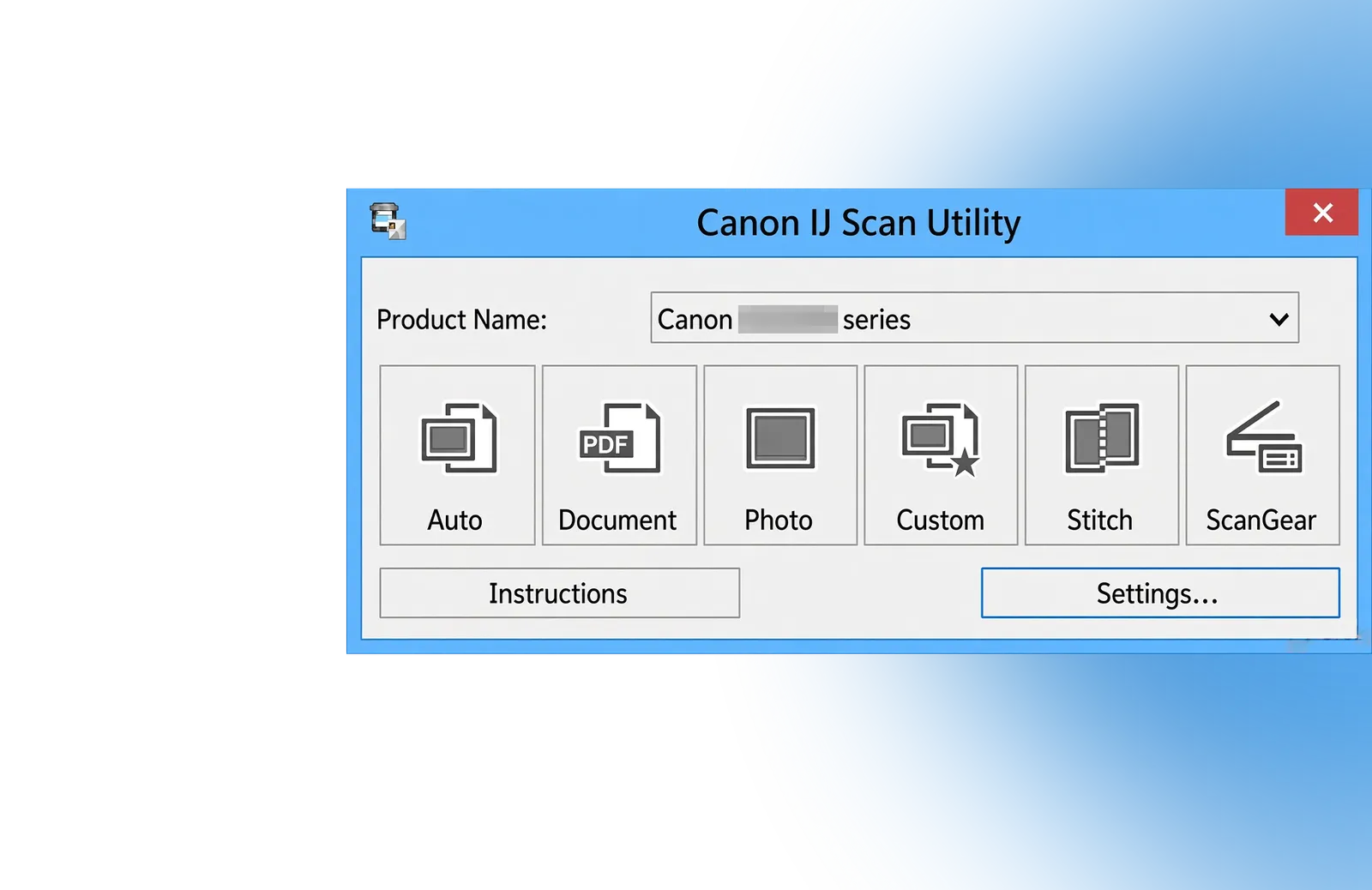
Using IJ Scan Utility

Using IJ Scan Utility

Though there are inbuilt scanning applications available in almost all the systems. But IJ Scan Utility is a software designed and developed by Canon to make the process of scanning easy. IThough there are inbuilt scanning applications available in almost all the systems. But IJ Scan Utility is a software designed and developed by Canon to make the process of scanning easy. It will allow you to connect the scanner with your System, Be it Mac or Windows, or Smartphones. You will easily be able to manage and Scan Files.t will allow you to connect the scanner with your System, Be it Mac or Windows, or Smartphones. You will easily be able to manage and Scan Files.

Apps Available for Mac and Windows

Apps Available for Mac and Windows

The Canon Print App is now available on the Windows App Store and Mac OS App Store.

Search Canon Print and Install it right away. It makes the process of setting up the printer and scanner much easier and faster.

Download and Find Canon Printers from your Chrome Browser

Download and Find Canon Printers from your Chrome Browser

You can now download our Extension directly on your Chrome Browser from the Chrome Extension Store.

Visit the Chrome Extension Store & Enter “Printer Finder

Plug-N-Play Printers

Plug-N-Play Printers

Many Canon Printers are Plug-n-Play, meaning that there is no need to install drivers or any software to run these printers or scanners, all you need to do is Power On your Printer, and connect it to your device, and you will get a prompt that automatically connects the printer and runs it on your device.

Disclaimer

We are not Canon!

We are not Canon or Affiliated with Canon, nor do we represent Canon INC. All images and graphics are the property of the registered trademark owner.

This website is not affiliated with or endorsed by Canon. We are an independent entity providing market research and other informational content related to Canon products and services.

We provide content behind paywall, Which means to see our guides and instructions you will need to pay for our subscription. The Drivers however can be checked on the official documentation for free at ij.start.canon

Costs Less than a cup of Coffee

Why Choose Premium Subscription?

Wondering what you get from the premium subscription.

Secure Official Links

Secure Official Links

We point you to official sources like ij.start.canon so you avoid fake error pages and unsafe remote-support scams.

Updates & Help

Updates & Help

Guides are updated regularly with clear help for Canon printer setup across devices.

Exclusive Guides

Exclusive Guides

Detailed, step-by-step OS guides for each printer and scanner model.